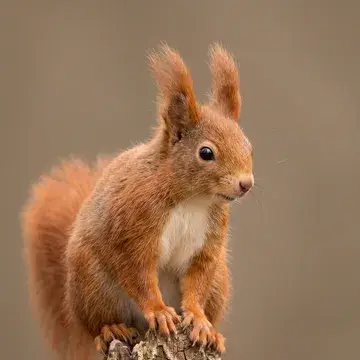
Quick facts
Length
18–24 cm, plus a 17–18 cm tail
Weight
Up to about 350 g
Lifespan
Can reach about 6 years, but only 20–50% of young survive to adulthood
Diet
Pine seeds, hazelnuts, acorns, fungi, bark
UK population
About 287,000
Status
Endangered in England and Wales; Near Threatened in Scotland
Red or grey?
Reds are smaller, with russet-orange fur and ear tufts in winter. Greys are larger, mostly grey, with no ear tufts and a silver fringe to the tail. Some greys have a brownish tinge, so look at size and ears as well as colour.
Where do red squirrels live?
They prefer conifer and mixed woodland. UK strongholds include Scotland, Anglesey, Northern Ireland, Northumberland, North Yorkshire, the Lake District, and the islands of Brownsea and the Isle of Wight.
What do red squirrels eat?
Mostly seeds, especially pine seeds, plus hazelnuts, ripe acorns, fungi, bark and sapwood. They store food, even hanging fungi in trees to dry for winter.
Why have red squirrels declined?
Grey squirrels, brought from North America in the 1800s, carry a squirrelpox virus that rarely harms them but often kills reds. Greys also eat acorns before they are ripe enough for reds. Woodland loss, roads and predators add to the pressure. Studies suggest that where pine martens return, grey numbers fall, which can help reds.
When are young born?
Usually 2–3 kittens are born between February and April, often with a second litter in May or June. They live in a drey, a ball of twigs and moss high in a tree.
Signs to look for
- Pine cones: stripped to look like apple cores
- Dreys: round twig nests close to the trunk
- Sound: a “chuk chuk” call and scolding chatter
Its link to the badger
Red squirrels live up in the trees and badgers below, so they rarely meet. Both need large, connected woods and hedgerows, and both benefit when habitats are joined up.
How you can help
- Report red and grey sightings to local red squirrel groups
- Drive slowly through red squirrel areas
- Support woodland and red squirrel charities
- In red areas, only feed squirrels if a local group advises it, and keep feeders clean to stop disease spreading