Quick facts
Height
60–75 cm at the shoulder
Weight
10–25 kg
Lifespan
Most live about 7 years; up to 16
Rut
Mid-July to late August
Young born
Mid-May to mid-June, usually twins
Status
Native; Least Concern in Great Britain
How to recognise a roe deer
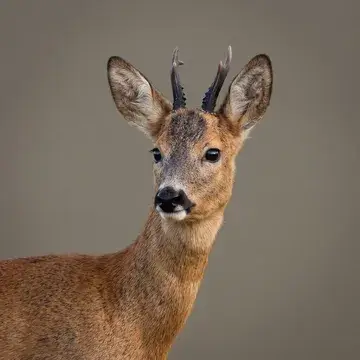
In summer the coat is bright red-brown; in winter it turns a duller grey-brown. Look for the black nose, white chin and white rump patch. Only the bucks have antlers: short and upright, with up to three points. They shed and regrow them every year. Fallow deer are bigger, with spotted coats and flattened antlers; muntjac are much smaller and hunched.
Where do roe deer live?
Mainly in woodland, coming out to feed in fields and on woodland edges. They live across mainland Britain but not in Ireland, with the most in Scotland and southern England. Roe died out in much of England, Wales and southern Scotland by the 18th century and returned after reintroductions in the 19th century.
What do roe deer eat?
They are browsers, nibbling buds and leaves of trees and shrubs, plus bramble, ivy, herbs, ferns, heather and grasses.
When are roe kids born?
Roe deer mate in the summer rut, from mid-July to late August. Like badgers, the female uses delayed implantation: the fertilised egg waits before it starts to grow. The kids are born the following May or June, usually twins. They lie hidden in long grass while their mother feeds nearby.
Signs to look for
- Slots: the deer's footprints, two narrow pointed toes
- Browsing: nibbled shoots and brambles at knee to chest height
- Fraying: in spring and summer, bucks rub their antlers on young trees, stripping the bark
- Sound: a loud, dog-like bark when alarmed
Its link to the badger
Roe and badgers often share the same woods and field edges, and both are most active around dusk and dawn. Badger watchers at a sett often see roe moving through. The two don't compete for food. Roe also share one surprising trait with badgers: delayed implantation.
How you can help
- If you find a lone kid lying in grass, leave it alone. Its mother is almost certainly nearby.
- Keep dogs on a lead in woods in May and June.
- Drive carefully at dawn and dusk, especially near woods.
- For an injured deer, call the RSPCA on 0300 1234 999.