
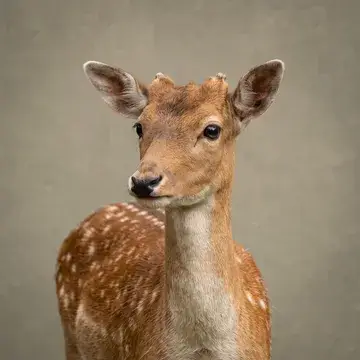
Fallow deer facts
Height
73–95 cm at the shoulder
Weight
Does 35–55 kg; bucks up to about 95 kg
Lifespan
Usually 8–10 years; some does reach 16
Rut
October to early November
Young born
June or July, usually one fawn
Status
Introduced; now naturalised
How to recognise a fallow deer
Fallow coats vary more than any other British deer. Most are chestnut with white spots in summer, but some are pale (called menil), almost black or even white. Fallow are the only British deer with broad, flat antlers, and they have the longest tail of any British deer. From behind, look for a white rump outlined by a black horseshoe, with a black stripe down the tail. Roe deer are smaller, with a plain pale rump and no visible tail, and muntjac are much smaller still.
Where do fallow deer live?
Mainly in broadleaved woodland with plenty of low cover, and more and more in conifer woods and on farmland. Fallow aren't native to Britain. Experts disagree about whether the Romans or the Normans first brought them, but they were kept for centuries in deer parks, and today's wild herds come from park escapes.
What do fallow deer eat?
Grass makes up most of their diet. They also eat herbs and the leaves of trees and shrubs, and in autumn they feast on acorns, sweet chestnuts, beech mast and fruit.
When are fallow fawns born?
The rut runs from October to early November and peaks in mid-October, when bucks groan loudly to attract does. About seven and a half months later, in June or July, each doe usually has a single fawn. Twins are rare.
Signs to look for
- Slots: hoof prints about 6.5 cm long, longer and deeper than a roe deer's
- Groaning: deep, belching groans from bucks in October
- Barking: a short bark from an alarmed doe
- Herds: groups grazing in woodland glades, parkland and fields
Its link to the badger
Fallow deer and badgers both favour broadleaved woods, and in autumn both feed on acorns and nuts. Where deer numbers are very high, heavy grazing can stop young trees and undergrowth growing back, which changes the woods that badgers and other wildlife depend on.
How you can help
- Drive carefully at dawn and dusk, especially near woods. Fallow are a common cause of road accidents.
- Watch the autumn rut from a safe distance, and keep dogs on a lead.
- Record sightings with the Mammal Society's Mammal Mapper app.
- For an injured deer, call the RSPCA on 0300 1234 999.