Barn owl facts
Height and wingspan
About 33 cm tall; wings about 90 cm
Weight
280–420 g (females are heavier)
Lifespan
About 4 years; the oldest known lived 15
Diet
Mainly field voles, shrews and wood mice
Nesting
March to August, usually 4–6 eggs
Status
Green list; specially protected by law
How to recognise a barn owl
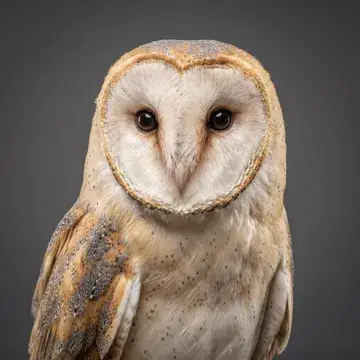
Look for a white, heart-shaped face, pure white underparts and golden-buff wings and back. Females usually have more spots on the chest than males. A tawny owl is bigger and brown all over, with a rounder face, and lives mainly in woodland. Barn owls hunt over open farmland and never hoot: they screech, hiss and snore instead.
Where do barn owls live?
Across lowland Britain, with the most in East Anglia, Lincolnshire and Yorkshire. They are absent from high ground, the far north and west of Scotland and most islands, and are scarcer in Ireland. They hunt over rough grass, field margins and woodland edges, and nest in old trees, farm buildings and nest boxes.
What do barn owls eat?
Mostly small mammals, especially field voles, plus shrews, wood mice and young rats, and now and then a frog or small bird. A barn owl usually eats 3 or 4 prey animals a night.
When do barn owls nest?
The main nesting season runs from March to August, with the first eggs usually laid in April. The female sits on 4 to 6 eggs for about 32 days, and the owlets leave the nest at about 8 weeks old. In good vole years, some pairs raise a second brood.
Signs to look for
- Pellets: thumb-sized, black when fresh and turning grey, under roosts and nests. Each holds the bones of 4 or 5 small mammals.
- Screech: a long, shrill shriek, which is why it was once called the screech owl
- Hissing: owlets make a snoring, hissing begging call in the nest
- Hunting: a white bird flying low and slowly over rough grass, or perched on a fence post
Its link to the badger
Barn owls and badgers are both night-time hunters of the countryside, and both use field edges and rough margins to find food. They even share some prey: wood mice make up about 15% of a barn owl's diet, and badgers eat mice and other small mammals too.
How you can help
- Leave strips of rough, tussocky grass along field and garden edges, where voles can live.
- Use safer ways to deal with rats. Rat poison passes up the food chain to owls.
- Put up a barn owl nest box, but not close to a busy road.
- Never disturb a nest. Barn owls are on Schedule 1 of the Wildlife and Countryside Act, so disturbing a nesting owl or its young is an offence.