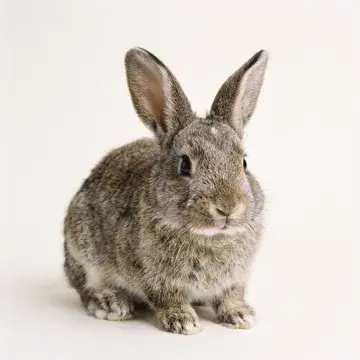
Quick facts
Length
About 40 cm
Weight
1.2–2 kg
Lifespan
Around 3 years on average
Diet
Grasses and other green plants
Home
Warrens: groups of burrows
Status
Introduced, now naturalised and common
Rabbit or hare?
Rabbits are smaller than brown hares, with shorter ears that have no black tips. Rabbits run in short dashes and dive underground; hares are long-legged, live above ground and outrun danger.
Where do rabbits live?
Grassland, farmland, woodland edges, dunes and road verges: anywhere with short grass to eat and soft soil to dig. They live in social groups in warrens.
What do rabbits eat?
Grasses and other low green plants, plus crops, bark in hard winters and garden plants. Rabbits re-eat some of their own soft droppings to get more goodness from their food.
When are babies born?
In the breeding season a doe can have a litter of 3–7 young roughly every month. Baby rabbits are born blind and furless in a short nest burrow called a stop, lined with grass and the mother's fur.
Signs to look for
- Holes: about 10–15 cm across, often with scattered droppings outside
- Droppings: round pellets, often in piles called latrines
- Grazing: very short “lawns” of grass
- Scrapes: small shallow diggings in turf
How to tell a rabbit hole from a badger sett
Rabbit holes are smaller and rounder, with droppings scattered around them. Badger sett entrances are 25–30 cm across and usually wider than they are tall, with large spoil heaps of earth, often with old bedding mixed in. Try our identifier: Badger sett, fox earth or rabbit hole?
Its link to the badger
Badgers dig out and eat young rabbits from their nest burrows, especially in spring. Rabbit holes are sometimes enlarged by badgers, and rabbits sometimes live in the outer tunnels of quiet setts.
How you can help
- Never touch a nest of baby rabbits; the mother only visits briefly, often once a day.
- Keep cats indoors at dawn and dusk in spring.
- If a wild rabbit looks ill or injured, call the RSPCA on 0300 1234 999.