Quick facts
Length
15–30 cm
Weight
Up to 2 kg
Spines
5,000–7,000
Lifespan
Usually 2–3 years in the wild
Diet
Mainly beetles, earwigs, caterpillars and earthworms
Status
Vulnerable in Great Britain (UK Red List)
How to recognise a hedgehog
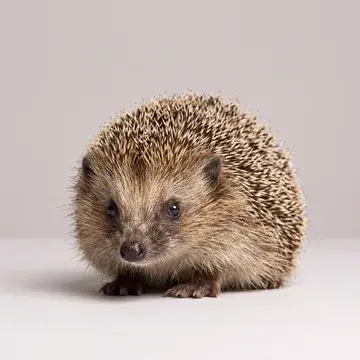
No other British mammal looks like it: a round brown body covered in spines, a pointed face with a dark nose and small eyes, and short legs. When frightened it rolls into a tight, prickly ball.
Where do hedgehogs live?
Woodland edges, hedgerows, farmland, parks and, more and more, gardens. By day they sleep in nests of leaves under hedges, log piles and sheds.
Do hedgehogs hibernate?
Yes. Unlike badgers, hedgehogs truly hibernate, usually from about October to April depending on the weather. They may wake and move nest during a cold snap.
When are hoglets born?
Hedgehogs mate from April to September, busiest in May and June. After about a month, the mother has 3–7 hoglets. They stay with her for up to six weeks and are independent at about eight weeks.
Signs to look for
- Droppings: dark and sausage-shaped, often glittering with bits of beetle wing case
- Day nests: small nests of grass and leaves under hedges and brambles
- Noises: loud snuffling and snorting at night
Its link to the badger
Badgers and hedgehogs hunt the same food, especially earthworms and beetles. Badgers can also unroll and eat hedgehogs. The Mammal Society says this is uncommon and is not a major cause of hedgehog decline; loss of habitat, roads and tidy, fenced-off gardens matter more. Badger myths and facts
How you can help
- Make a 13 cm by 13 cm gap under fences so hedgehogs can travel between gardens (a “hedgehog highway”)
- Leave a wild corner, leaf litter and log piles
- Put out shallow water, never milk
- Avoid slug pellets and rat poison
- Check bonfires and long grass before burning or strimming
- A hedgehog out in daylight may need help: contact a local rescue or the British Hedgehog Preservation Society